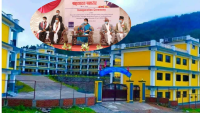
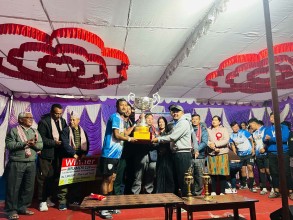
While relief convoys bypassed Naukunda for devastated riverbanks, classrooms there filled with orphaned and displaced students. A new initiative of HELP in partnership with School In A Bag brings learning resources and joyful classroom workshops for 2,000 children in Rasuwa and Nuwakot_ .
*
KATHMANDU, Nov 20* — When a child in a Kalikasthan school recently spoke about a new classmate transferred from a flood-ravaged village, the student’s isolation was clear.
“Who does he even have now?” one child asked visiting members of HELP. “His entire family was swept away. He managed to run, but the floods took his friend right in front of his eyes. He is totally new to school, too. Where will organisations like yours take him now?”
When the Bhotekoshi floods tore through upper Rasuwa and washed away the Trishuli riverside highway earlier this year, hundreds of relief trucks rerouted along the narrow, boggy roads of Naukunda. Bound for the hardest-hit riverbanks, convoys rolled past schools whose buildings remained intact, leaving behind an overlooked crisis.
While Naukunda’s classrooms still stood, many of the children inside had lost breadwinners running shops downriver, or were absorbing displaced peers mourning lost siblings and parents. Because their physical infrastructure survived, these schools received little direct aid, leaving grieving students at risk of quiet isolation.
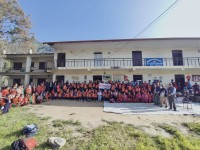
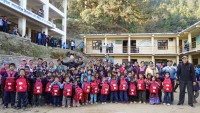
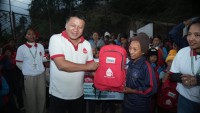
To address that gap, the Helambu Education and Livelihood Partnership (HELP) and UK-based charity School in a Bag (SIAB) launched a targeted response on Friday, hand-delivering 2,000 SchoolBags filled with learning resources across more than 30 public schools in Naukunda.
“A SchoolBag cannot replace what these children have lost, but it sends an unmistakable message that they have not been forgotten, that they belong in school, and that their education must continue,” said Jimmy Lama, co-founder of HELP.
Under SIAB’s Nepal Flash Flood Initiative, which aims to reach over 3,500 students across Rasuwa, Nuwakot, and down the river valley, every child from Early Childhood Development (ECD) through Grade 8 in the selected schools is receiving a SchoolBag packed with learning resources, hygiene kits, geometry tools, and winter hats, alongside supplementary materials for Grades 9 and 10.
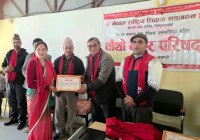
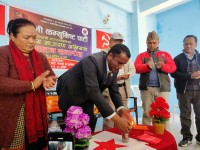
Material supplies are only half the story. Guided by the principle that foundational education must be strengthened from a child’s very first days in the classroom—the core philosophy of HELP’s Saathi Teachers Programme—30 Saathi Teachers have joined local municipal leaders and school teams across 15 schools. Together, they are leading one-day play-based, storytelling, and art workshops designed to help students feel safe in classrooms again, while facilitating peer-learning sessions for local educators.
The outreach in Naukunda follows early assessments in Bidur, drone-assisted solar light distributions in the cut-off village of Haku (Aamachhodingmo Rural Municipality), and relief work across Kalika and Ramche. Organisers have also provided bags and warm tracksuits to displaced Hakubesi students currently sheltering in Kathmandu.
Since launching this joint initiative in Sindhupalchowk in 2012, School in a Bag and HELP have distributed over 27,000 bags across more than 20 districts—primarily targeting disaster-affected areas to restore access to education. The current flood response will push that total past 30,000 children nationwide.
A Bag Full of Learning | A Future Full of Opportunities